
Legrand AV
Customer Experience
Strong brands, fragmented experience. No one had mapped what customers actually went through.
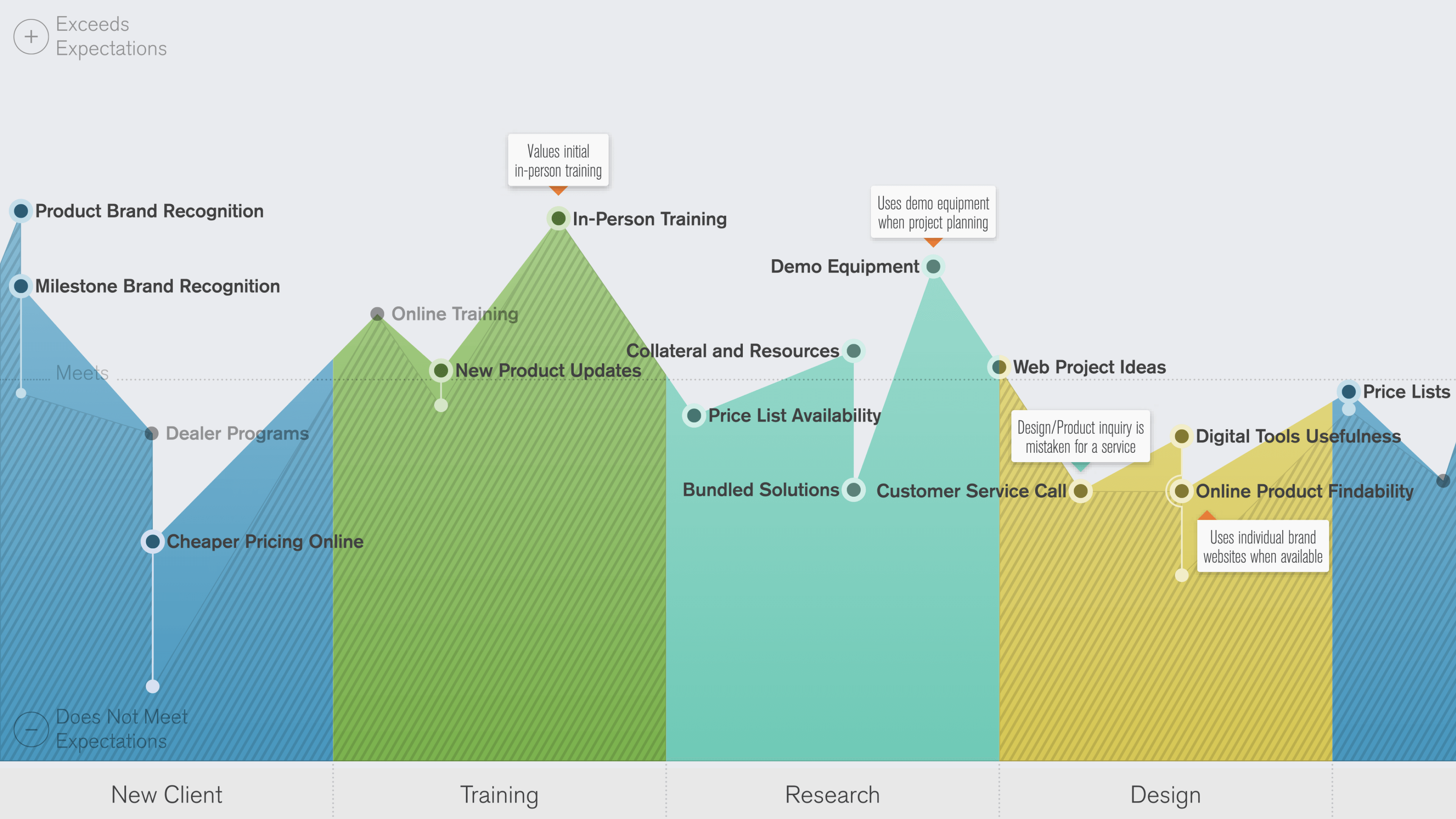
Overview
Legrand AV’s portfolio — Chief, Da-Lite, Vaddio — had loyal customers across education, corporate, and government markets. What they didn’t have was a shared picture of the journey those customers took, or where it broke down. I led the field research that built that picture, and helped make it the foundation for ongoing organizational change.
Role
Lead researcher
Methods & artifacts
Field studies
Interviews
Journey maps
Service blueprint
Personas
4
Customer segments: specifiers, engineers, installers, end users
3
Research methods: site visits, call monitoring, 1-on-1 interviews
18mo
Ongoing research cadence established
Approach
Getting inside the customer experience — not just asking about it
A survey or a stakeholder workshop would have given Legrand what they already suspected. To surface what they didn't know, we needed to be present where the customer experience actually happened — in sales meetings, on support calls, on job sites, and in conversations with the people who specify, install, and ultimately live with the products.
Working alongside one other researcher, I led a field study that spanned the full customer journey from first contact through post-installation support. Three distinct research contexts gave us three different angles on the same experience.
1
Sales meeting observation
Attending sales meetings gave us a firsthand view of how customer relationships began — what Legrand's teams emphasized, what customers asked, and where early misalignments between expectation and reality were already forming.
2
Customer service call monitoring
Observing live support calls revealed the full spectrum of customer inquiries — from routine questions to the edge cases that challenged agent expectations and call volume assumptions. These calls were windows into friction that never appeared in product feedback.
3
One-on-one customer interviews
Direct conversations with specifiers, engineers, installers, and end users gave each customer segment a distinct voice. Their pain points were specific, contextual, and often invisible to Legrand's internal teams.

Observing support staff in context revealed patterns invisible in call logs or satisfaction scores.

Fulfillment and return processes observed on-site — where friction directly affected customer satisfaction.
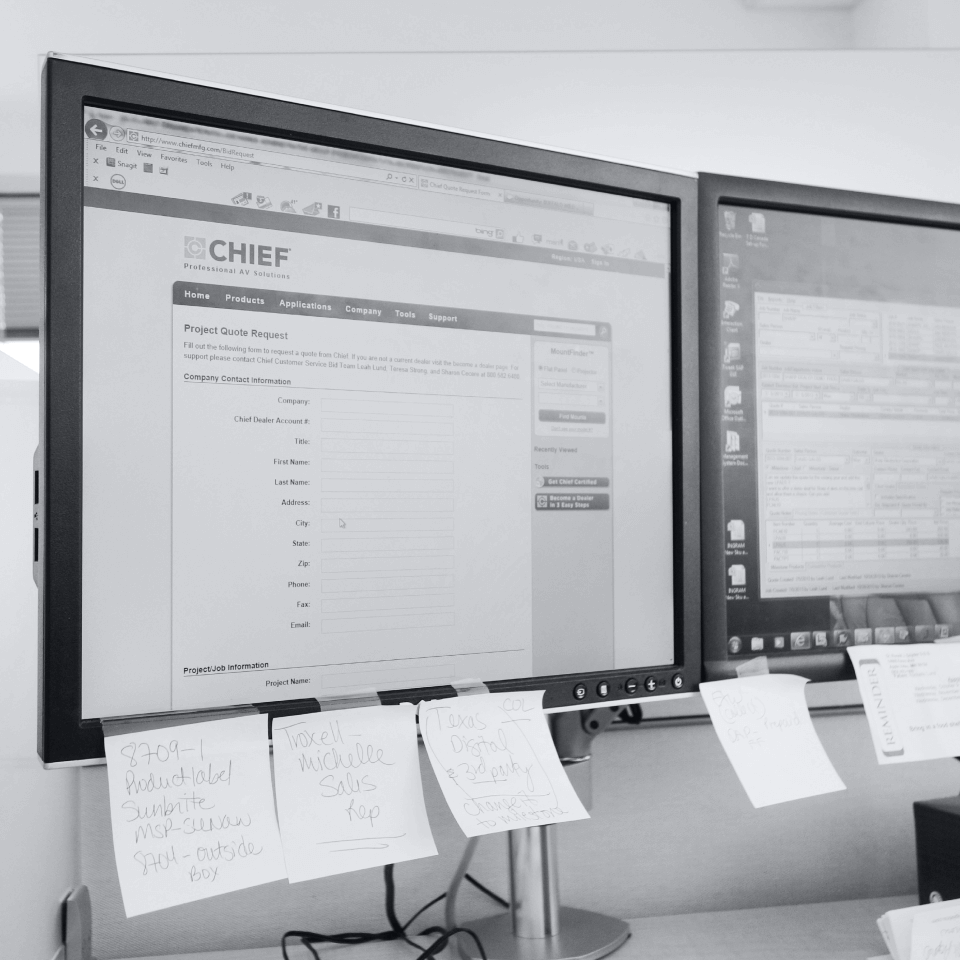
Live call observation captured the spectrum of customer inquiries and agent responses in real time.
Synthesis
One map to hold the entire customer experience
The field study generated a volume of qualitative data that could easily have fragmented into disconnected insights. The synthesis challenge was to create a single artifact that gave Legrand's cross-functional teams — including finance, fulfillment, and customer experience — a shared view of the journey without requiring them to read through raw research.
The output was a hybrid journey map and service blueprint — a format that went beyond documenting what customers experienced by also mapping the internal processes, support functions, and failure points behind each touchpoint. It identified not just where customers struggled, but why the system produced those struggles.
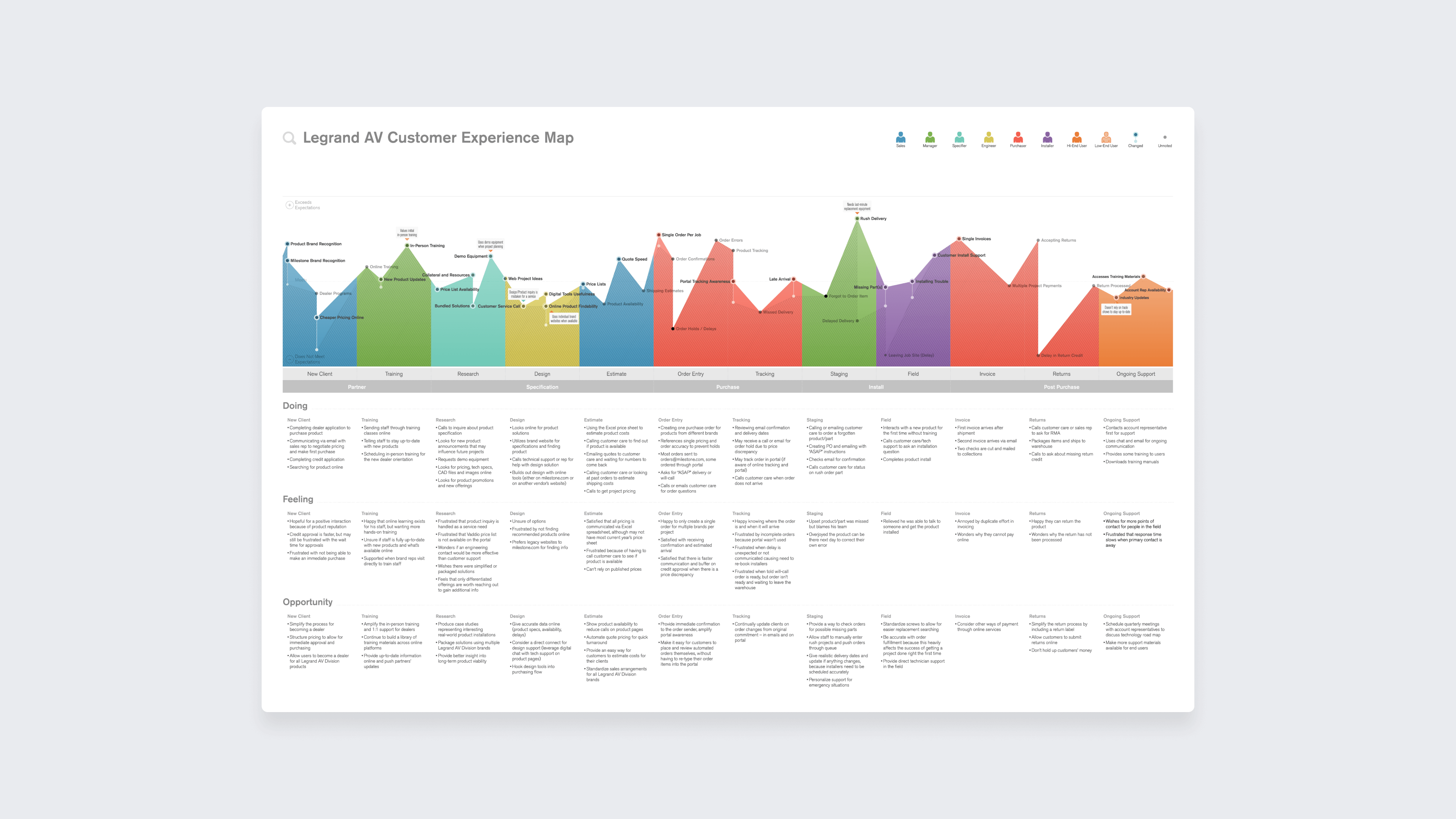
The journey map and service blueprint in one artifact — organizing touchpoints, falloff points, and feedback loops across the full customer lifecycle, with the internal processes that drive each stage mapped behind them.
Personas
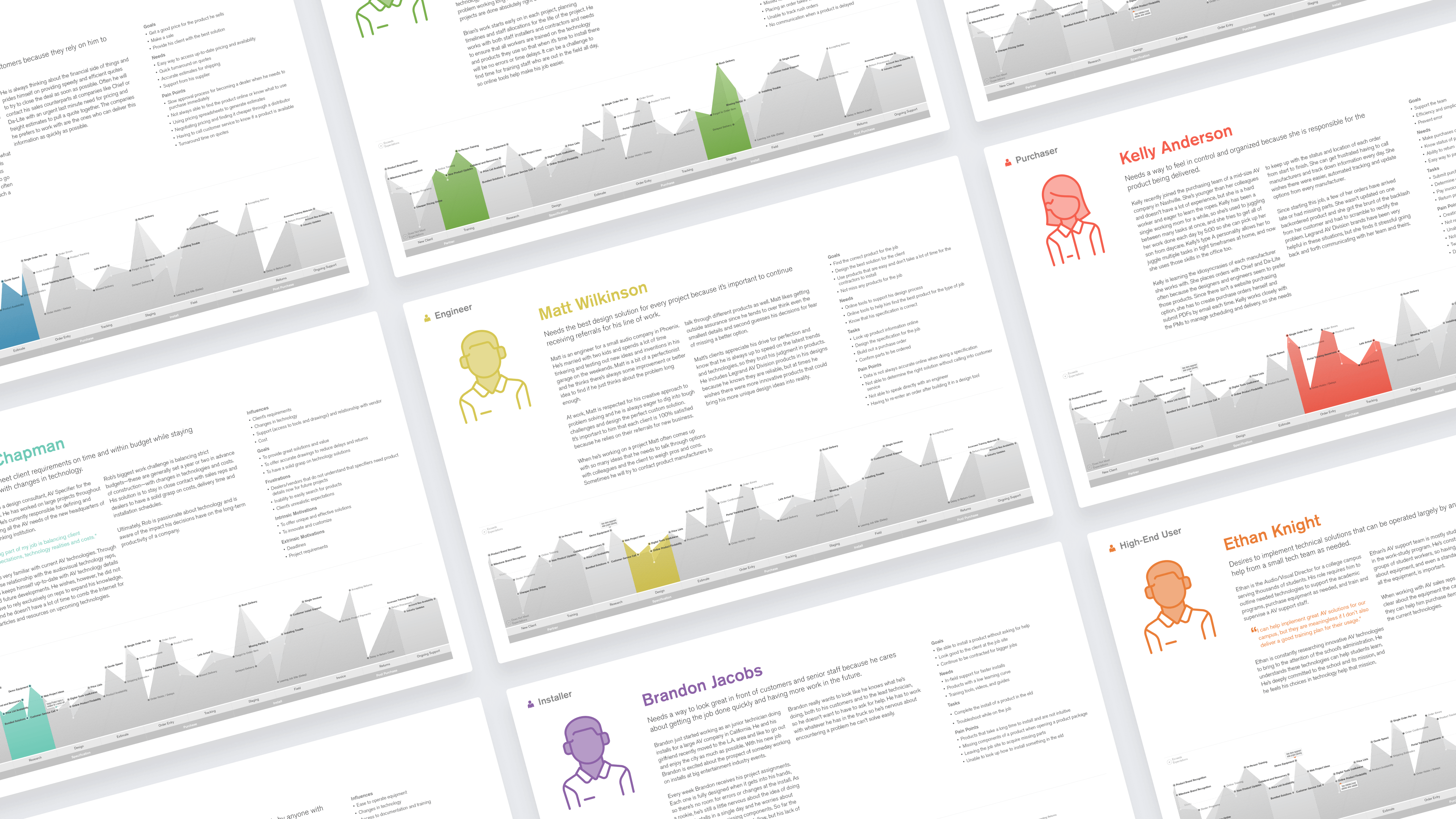
Customer segments, newly added or updated, each with distinct sets of needs.
Legrand's customers aren’t a single type of user. The person who specifies an AV system has fundamentally different needs, interactions, and pain points than the person who installs it — or the end user who lives with the result. Treating them as one audience was part of what had made the customer experience inconsistent.
Outcomes
Research that changed how Legrand works — not just what they shipped
The most meaningful outcomes from this project weren't features or interfaces. They were organizational — changes to how Legrand structured collaboration, prioritized improvements, and sustained its understanding of customer needs over time.
_
Digital consolidation
Legrand began consolidating its fragmented branded web experiences into a single, cohesive digital platform — guided directly by the research findings on where customers lost orientation navigating across brands.
_
Offline touchpoints improved
Return and replacement processes, identified in the journey map as significant friction points, were prioritized for changes to policy alongside the digital work.
_
Design thinking embedded
Legrand implemented a design thinking training program across the organization, expanding the capacity to act on research findings beyond the CX team.
_
Cross-functional ownership
Finance and fulfillment teams were brought into the CX improvement process — a structural change that closed gaps that had previously fallen between departments.
_
Continuous research practice
Rather than a one-time study, the research became an ongoing practice — revisited regularly to measure progress, surface new gaps, and track how customer needs shift over time.