
Master Builders Solutions
Project Atlas
When concrete leaves the plant, the clock starts — and nobody can see it.
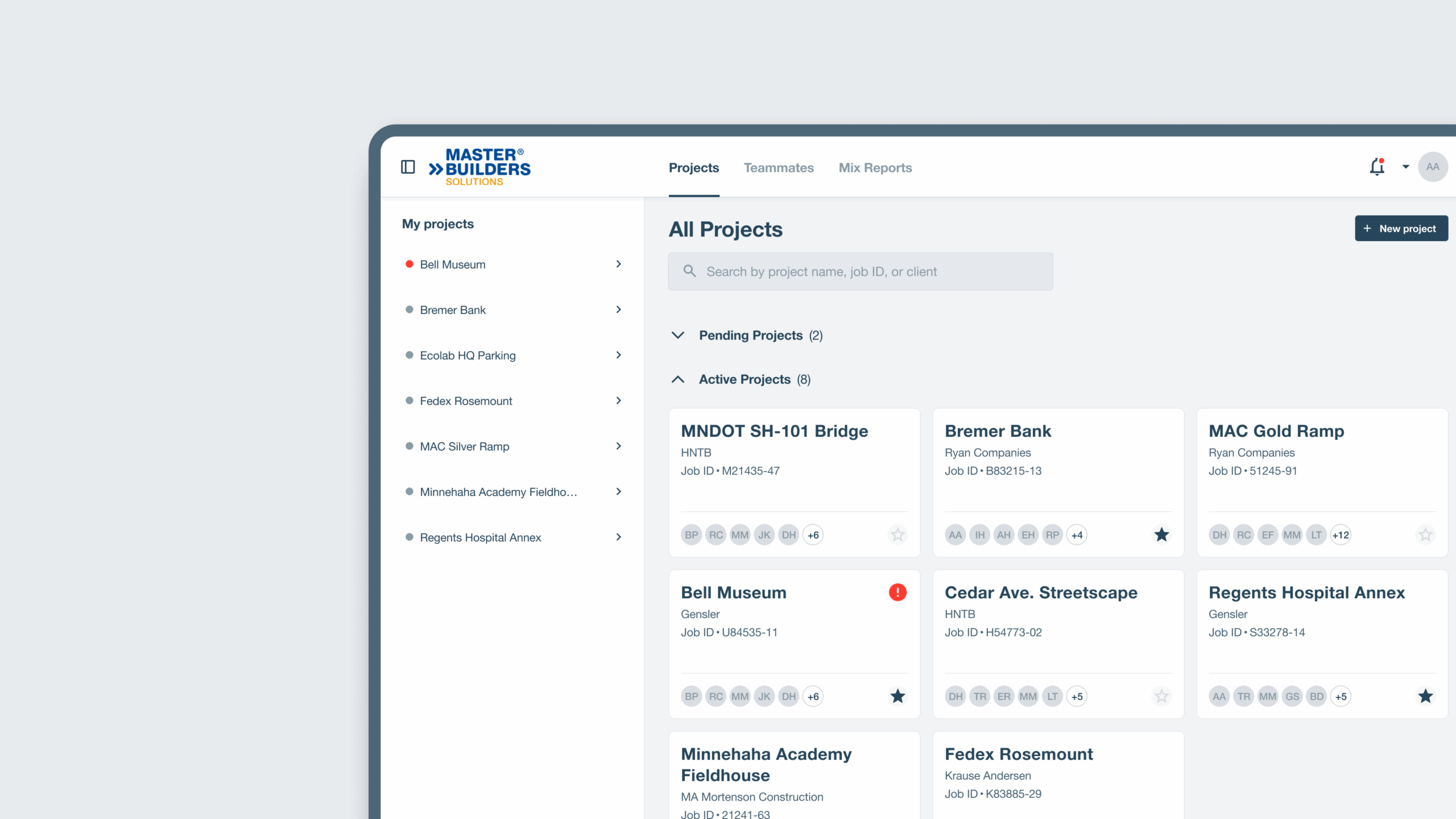
Overview
A rejected concrete load costs tens of thousands of dollars and can set a job back weeks. I worked with Master Builders Solutions to design a system that puts the right signal in front of the right person — before the trucks arrives.
Role
UX lead
Methods & artifacts
User research
Workshop facilitation
Product strategy
Mobile & web app design
Moderated user testing
Discovery
Learning an industry from the inside out
Ready-mix concrete is perishable. From the moment it's batched at the plant, every variable — temperature, travel time, drum rotation, humidity on the job site — affects whether what gets poured meets spec. The people managing those variables had no shared view of what was happening in real time.
I ran a series of discovery workshops with concrete experts at Master Builders Solutions, mapping the entire production journey from job estimation through post-delivery. The result was a touchpoint map that documented every role, handoff, data source, and gap in the process — a shared artifact that let us align quickly on where the system was breaking down.
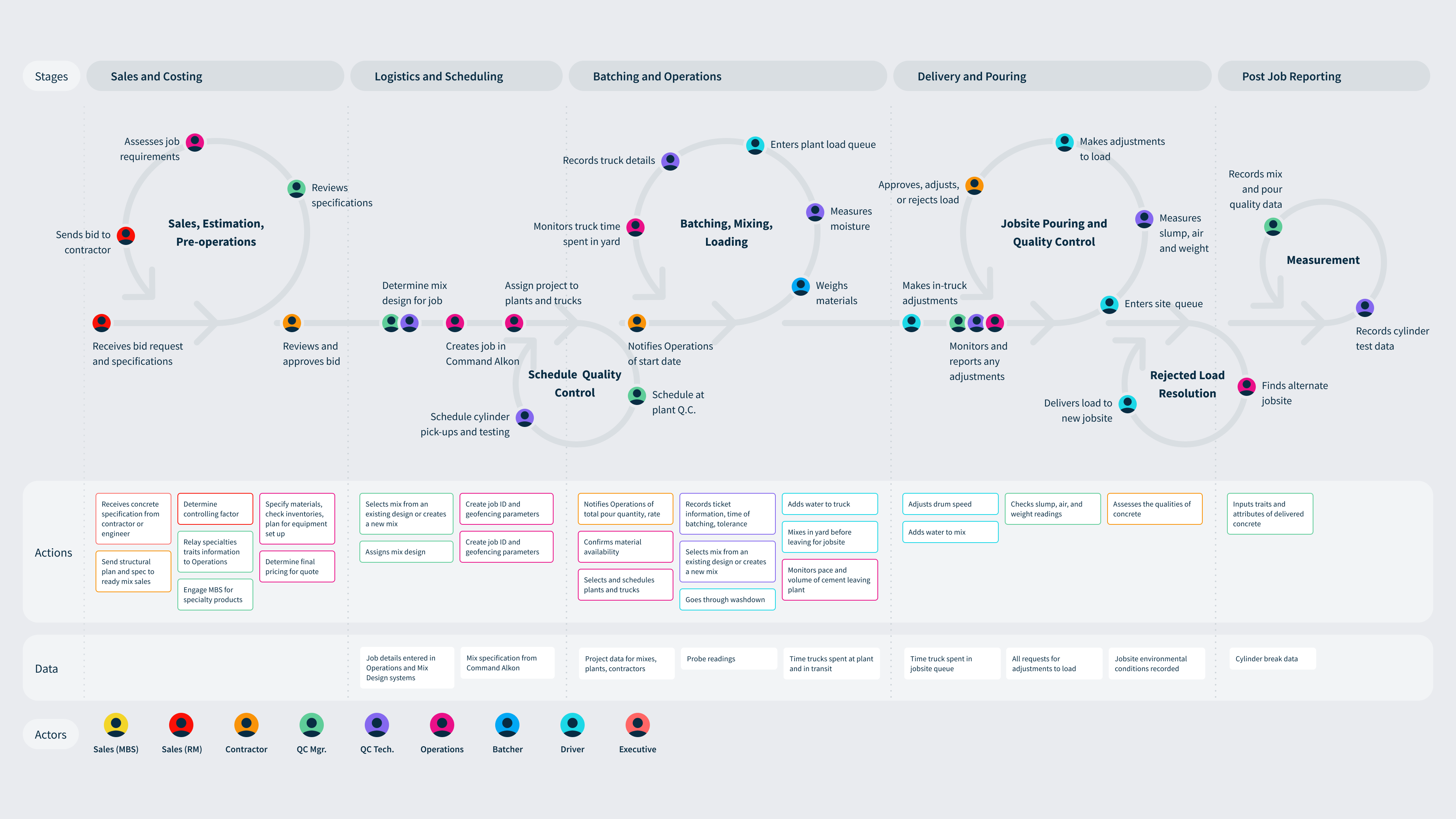
Touchpoint map identifying the people, processes, data sources, and failure points across a poured concrete job, from batch plant to pour site.
The workshops surfaced a primary goal, maintaining predictable concrete loads in transit, and a secondary one we hadn't anticipated: collecting batch data to optimize future mix designs. That second insight shaped the administrator portal web app.
The problem
Three gaps, one broken system
In-depth interviews with ready-mix producers, dispatchers, and quality control personnel revealed the same friction appearing in different forms across every role.
1
No real-time visibility
Producers juggled material availability, environmental conditions, and travel times with no live data. Decisions were made on instinct and outdated information.
2
Communication that broke under pressure
When something went wrong mid-delivery, critical information shared phone-to-phone between dispatchers, drivers, and QC personnel is late and poorly documented.
3
Quality control without a safety net
QC teams were responsible for strict specifications and timelines, but had no system to catch out-of-range parameters before concrete arrived on the jobsite.
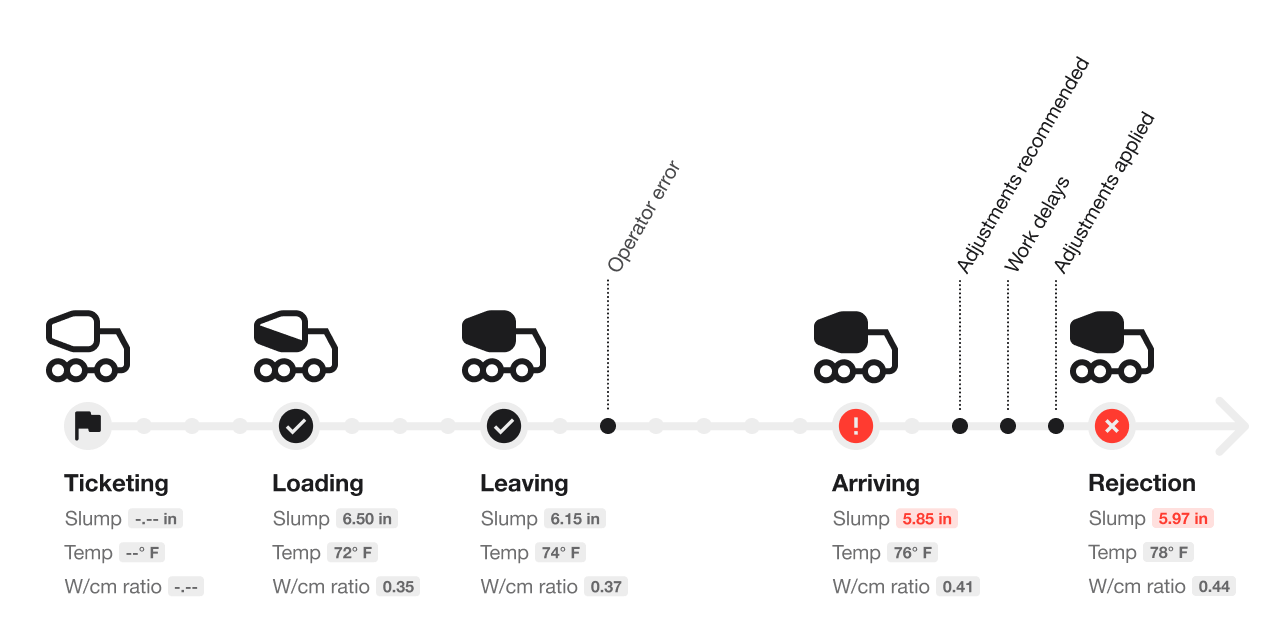
The current state: a fragmented chain of handoffs with no shared data layer and no mechanism for early intervention.
Designs and decisions
The hard problem was people, not sensors
The technical and data resources — sensors at the plant, in trucks, and on job sites feeding a single platform — was straightforward to define. The harder problem was: who needs to know what, and when?
Working with quality control managers, I documented the information they use on traditional paper batch tickets alongside what sensor data could now provide. From there, I worked with operations and materials experts to write user stories mapping data to roles, risk thresholds, and corrective actions.
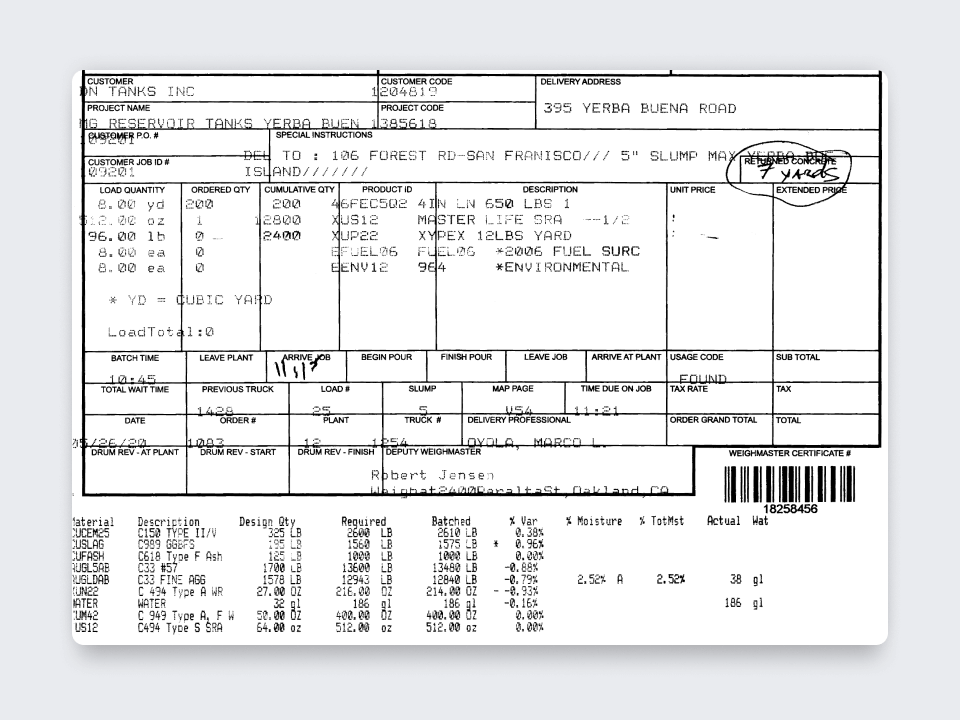
Paper ticket fields mapped to sensor data, annotated with QC manager input.
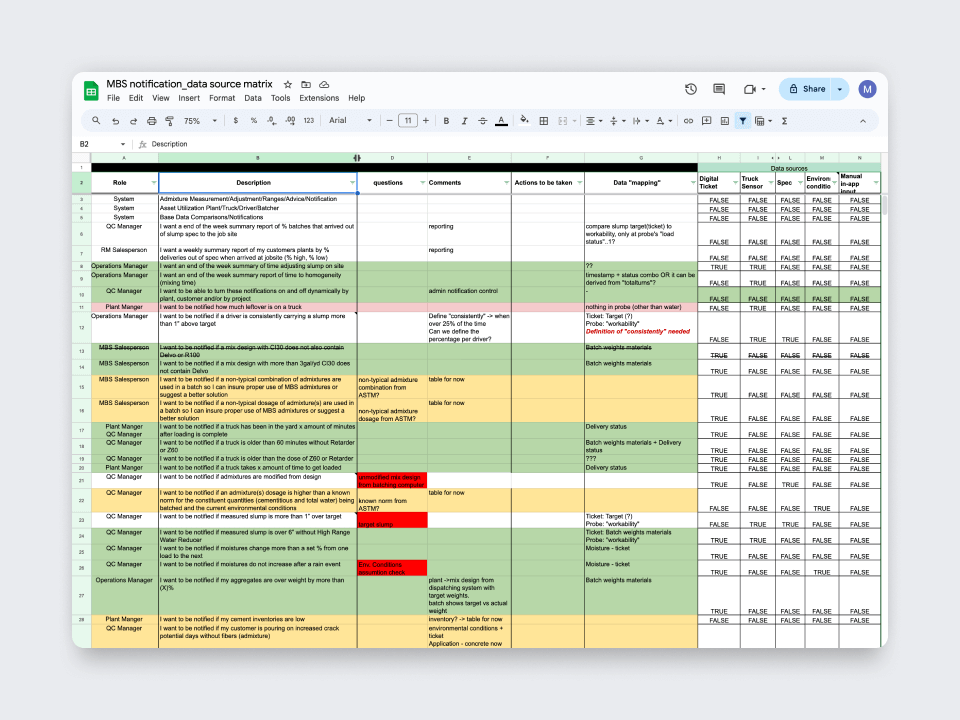
User stories mapped alert types to roles, thresholds, and required actions.
Pivotal design decision
Early concept tests showed no single alert configuration worked for every project or team. Rather than hard-coding a solution, I redesigned for configurability. Operations managers set up teams and alert thresholds on a project-by-project basis.
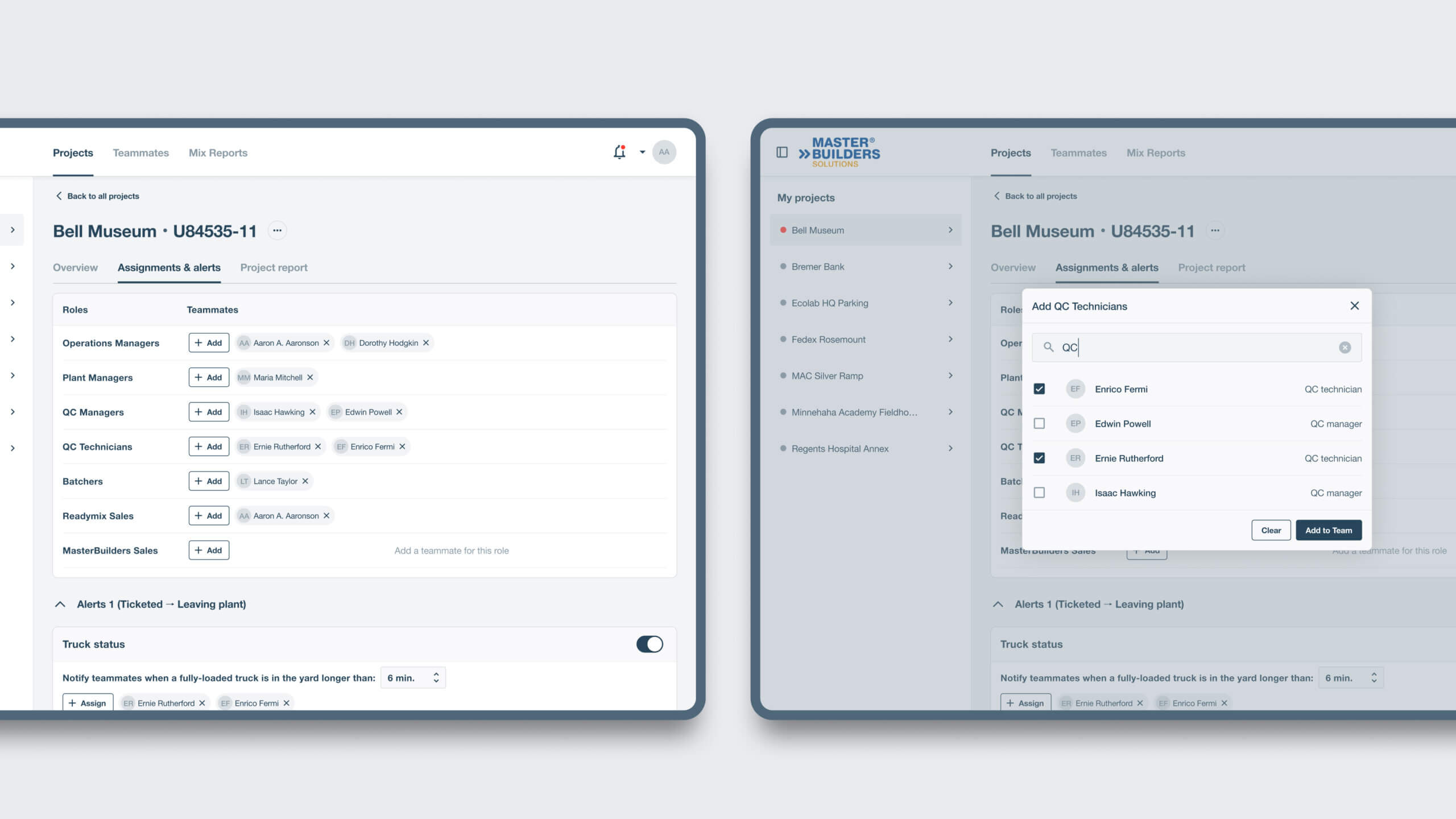
Operations managers configure which team members receive alerts and what conditions trigger them, tailored to each project's roles and batch specifications.
When an out-of-range parameter is detected, the system pushes an alert to the qualified team member with full context: the anomaly, the preceding data, and the available actions. Their response becomes part of the record — both notifying the next team member in the chain and documenting what was done.
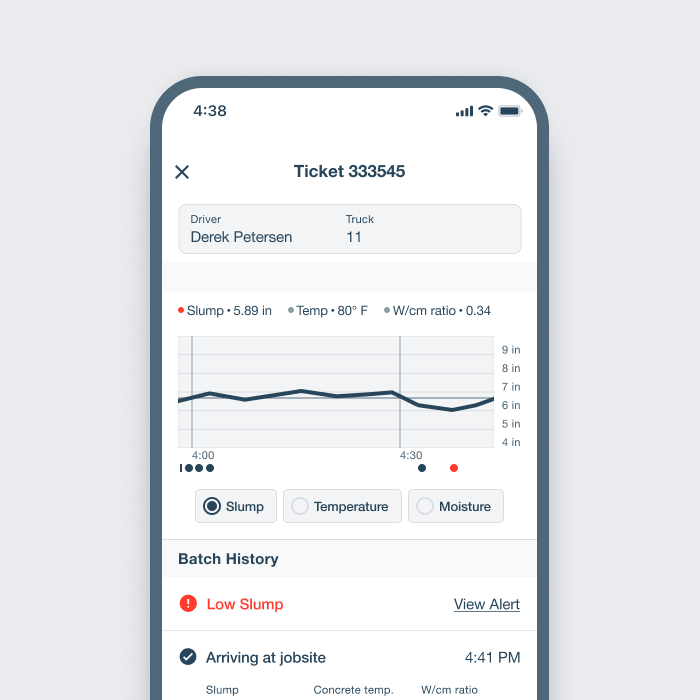
Full delivery history visible to QC and operations teams.
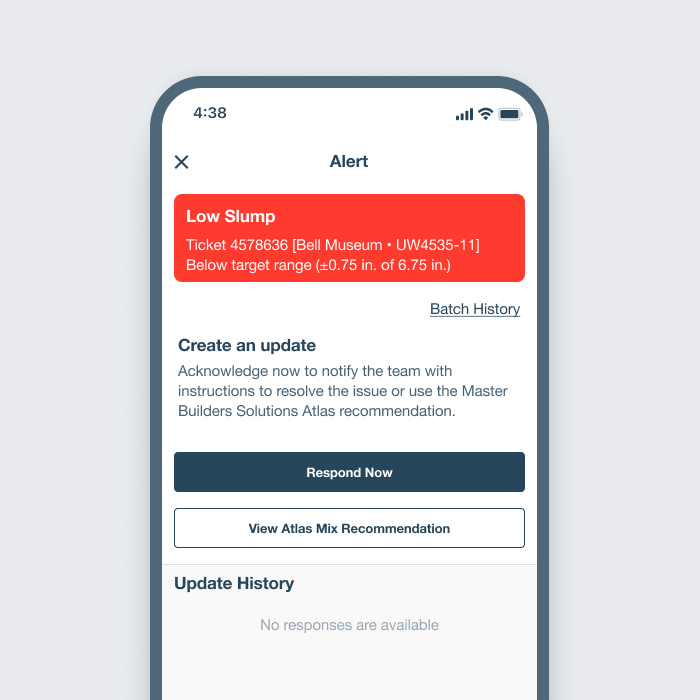
Alert screen with context and action options.
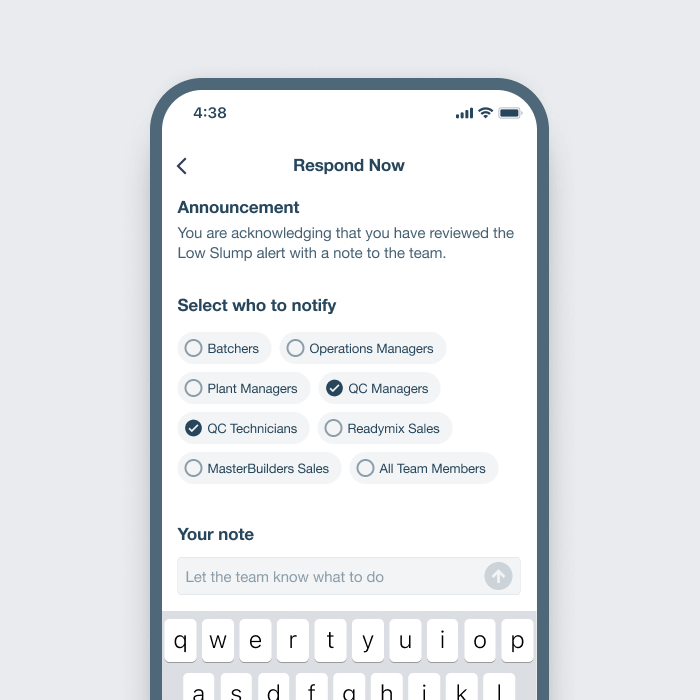
Response recorded and broadcast to the team.
The administrator portal
Turning delivery data into better future mixes
The secondary insight from discovery — that batch data could improve future mix designs — shaped an entirely separate surface. The administrator portal consolidates delivery histories with a library of mix specifications, giving producers a track record for each mix design across real-world conditions.
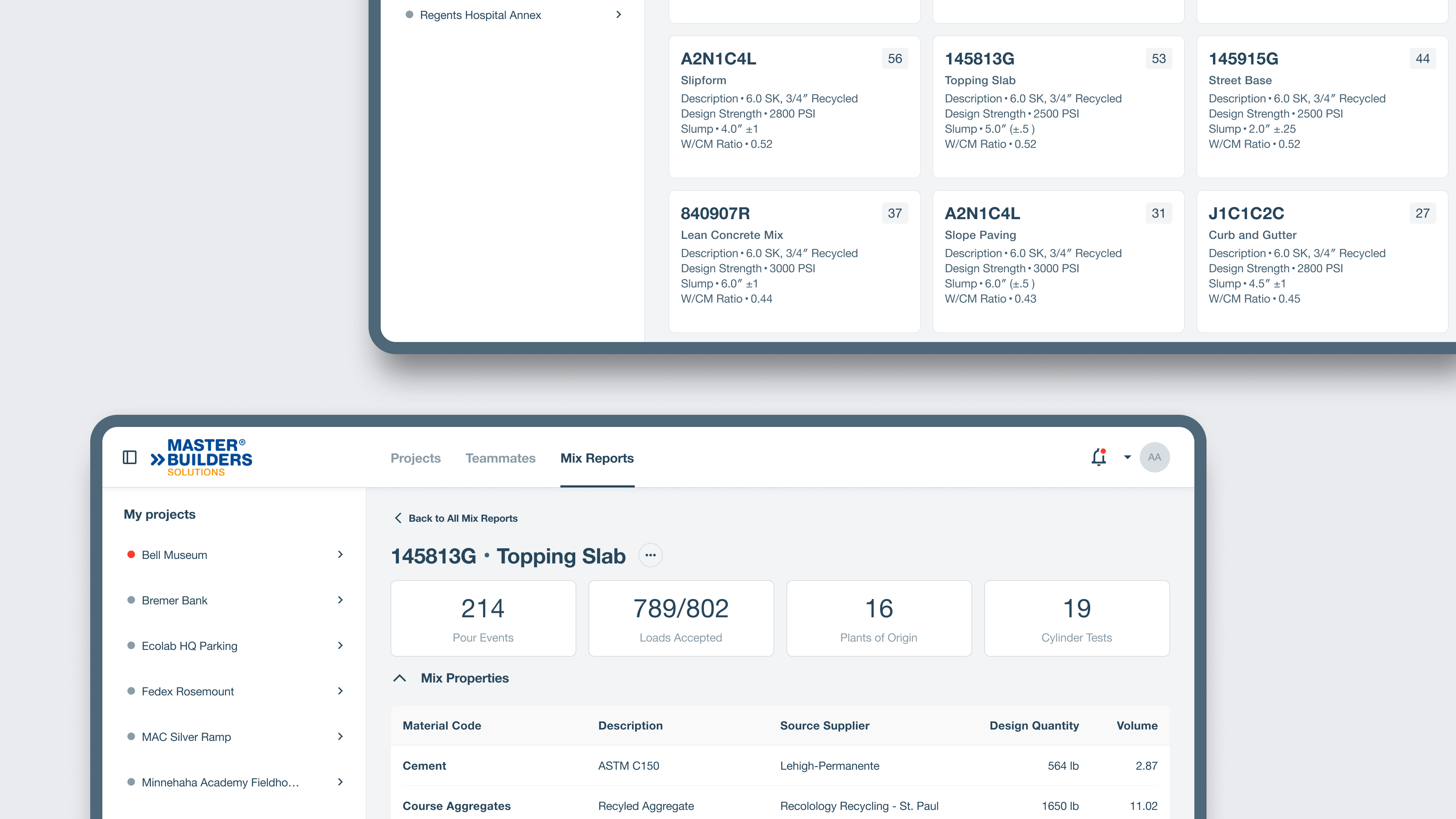
The admin portal links historical delivery data to mix specifications, giving producers a track record to inform future batching decisions and reduce rejected loads.
The outcomes
A MVP shipped to clients. Built for what’s next.
_
Minimal training required
Designed to be picked up without onboarding, accessible to dispatchers, QC personnel, and contractors regardless of technical background.
_
Personalized by role
Each user sees only the information relevant to their responsibilities. Everyone can act; no one is overwhelmed.
_
Configurable by project
Operations managers configure teams and thresholds per job — the system adapts to the work, not the other way around.
_
A foundation for AI
The next generation roadmap integrates on-site weather sensors and predictive AI — built on the data infrastructure established by Project Atlas.